

If you have both chronic kidney disease (CKD) and diabetes, you’ve probably been told to keep your blood sugar under control.
But you may be wondering what that actually means.
Perhaps you have been advised that you have pre-diabetes. Maybe your GP has mentioned diabetes medication. Or maybe you’re trying to understand whether your blood sugar levels are actually affecting your kidney function.
It’s completely normal to feel unsure.
In this blog, we’ll walk through:
- Why blood sugar control matters in CKD
- How to tell if your blood sugar control is good
- What you can do if your levels are higher than recommended
You don’t have to work it all out alone.

Diabetes and CKD
Diabetes is one of the leading causes of chronic kidney disease in the UK.
Over time, higher blood sugar levels can damage the small blood vessels inside the kidneys, increase protein leaking into the urine (albuminuria) and lead to a gradual loss of kidney function.
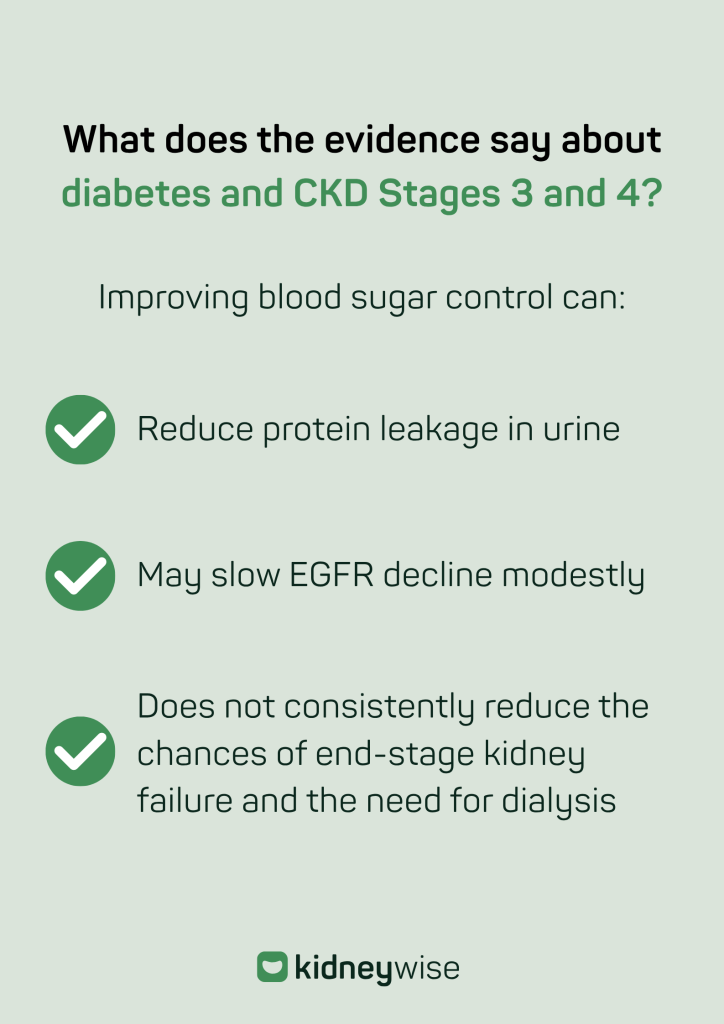
Research has shown that improving blood sugar control can reduce protein leaking into the urine and, over time, can reduce your risk of getting to stage 5 CKD.
In addition to slowing down kidney function decline, improving blood sugar control may also lead to a reduction in:
- Diabetic eye disease (retinopathy)
- Nerve damage (neuropathy)
- Foot complications
- Cardiovascular disease
- Diabetes-related hospital admissions
Once you reach CKD stages 3 or 4, improving blood sugar control remains an important part of protecting your overall health. However, it is unlikely to be the only factor that determines whether CKD progresses. This is because a number of different processes can contribute to further kidney damage. These include high blood pressure, protein leakage into the urine, inflammation, cardiovascular disease, smoking, excess weight, and other underlying changes occurring within the kidneys themselves. Therefore, it is important to address all of these risk factors when trying to prevent further decline in your kidney function.
How can I tell if my blood sugar control is good?
Many people with diabetes or prediabetes feel completely well, even if they have raised blood sugar levels. That’s why blood tests are so important.
The most common way to understand what your blood sugar control is over time is through a blood test called HbA1c.
This measures the amount of sugar attached to your red blood cells, which reflects your average blood sugar levels over the previous two to three months. If you have diabetes, this test should be done every three to six months, depending on how stable your results are.
HbA1c targets in the UK are typically individualised based on your age, diabetes type, and treatments. Generally, the recommended targets across the NHS and National Institute for Health and Care Excellence (NICE) guidelines fall between 48 mmol/mol (6.5%) and 53 mmol/mol (7.0%).
However, specific targets vary depending on the situation:
- Type 1 diabetes: 48 mmol/mol or below, provided it can be achieved safely without experiencing problematic hypos.
- Type 2 diabetes (diet/metformin only): 48 mmol/mol.
- Type 2 diabetes (medications carrying a hypo risk, e.g., insulin or gliclazide): 53 mmol/mol.
- Older adults or frail individuals: 58–64 mmol/mol to prevent dangerous episodes of low blood sugar.
Your diabetes team may set a personalised target range, so it is important to discuss this target range with your team.
It is not just high blood sugar levels that should be minimised. Very low HbA1c levels may also be harmful, as it may indicate frequent episodes of hypoglycaemia (low blood sugars), which can cause symptoms such as sweating, shaking, dizziness, confusion, and falls. In severe cases, it can lead to loss of consciousness and may require emergency treatment.
Want help understanding your HbA1c and other CKD-related blood results? Download our free guide, CKD Results Made Simple, and learn what your kidney blood tests really mean.
How to improve blood sugar control when you have diabetes and CKD
The good news is that there are several ways to improve blood sugar levels.
Most people benefit from a combination of medications, lifestyle habits, and diet. Let’s run through each of these below.
Medications
Over the last decade, diabetes treatment has evolved significantly. Two groups of medications have attracted particular attention in people with CKD as they appear to offer kidney protection beyond their blood sugar-lowering effects:
1. SGLT2 inhibitors, e.g., dapagliflozin and empagliflozin.
Research suggests these medications may:
Reduce protein leakage into the urine
Slow kidney function decline
Reduce cardiovascular risk
Importantly, some of these benefits appear to occur even if blood sugar levels are not lowered.
2. GLP-1 Receptor Agonists, e.g., semaglutide and liraglutide.
These medications can help improve blood sugar levels and may also provide additional cardiovascular and kidney benefits for some people.
Not everyone will be suitable for these medications, so it’s important to discuss your options with your healthcare team.
Lifestyle habits
Lifestyle factors also play an important role.
These may include:
Being physically active
Maintaining a healthy body weight if appropriate
Prioritising sleep
Managing stress
Stopping smoking if you smoke
Taking medications as prescribed
You don’t need to change everything at once. Small, realistic changes are often more sustainable than trying to overhaul your entire lifestyle overnight.
Diet
Food plays an important role in blood sugar management.
However, dietary advice can become more complicated when you have both CKD and diabetes.
Many people find themselves wondering:
“Should I focus on my kidneys or my blood sugar?”
The answer is both, and the good news is that there is often more overlap than people realise.
Rather than trying to cover everything here, we’ll be exploring this topic in much more detail in next month’s blog, where we’ll discuss the dietary strategies that may help support healthy blood sugar levels while also considering your nutritional needs to support your kidneys.

Key takeaways
✅ Blood sugar control remains an important part of managing CKD and diabetes.
✅ HbA1c is the main blood test used to assess long-term blood sugar control.
✅ Personalised HbA1c targets are important, especially in CKD stages 3 and 4.
✅ Improving blood sugar control may reduce albuminuria and can slow kidney function decline.
✅ Good blood sugar management may also help reduce the risk of eye, nerve, and cardiovascular complications.
✅ Newer medications such as SGLT2 inhibitors and GLP-1 receptor agonists may offer additional kidney and heart benefits for some people.
✅ Lifestyle habits and diet remain important parts of managing diabetes and CKD.
✅ Blood sugar is one piece of the kidney health puzzle, not the whole picture.
Living with both CKD and diabetes can feel overwhelming at times, so it’s completely understandable to wonder whether you’re doing enough to protect your kidneys and your future health.
The evidence suggests that good blood sugar management remains an important part of the picture. It may help reduce complications, support overall health, and contribute to protecting kidney function.
If you’d like personalised support with managing CKD and diabetes together, why not book a free 15-minute enquiry call? We can help you understand your blood results, make sense of any conflicting advice you might have encountered, and build a practical plan that works for your life.
