

Living with Chronic Kidney Disease (CKD) Stage 3 or 4 can feel like navigating a maze of confusing and sometimes contradictory advice, especially when it comes to fluids. You’re likely told to drink plenty of water, which sounds simple enough, right? Unfortunately, many people receive the “drink more water” message without the crucial details that make it truly helpful. That’s where this blog post comes in – to provide you with the clarity and practical guidance you need.
In this post, we’ll explore how to determine the right amount of fluid for your individual needs, learn to recognise the signs of dehydration, and discover what people with kidney disease can drink besides water. Get ready to ditch the confusion and take control of your fluid intake with confidence!
This blog post is for individuals with CKD Stages 3 & 4 who are NOT on a fluid restriction.
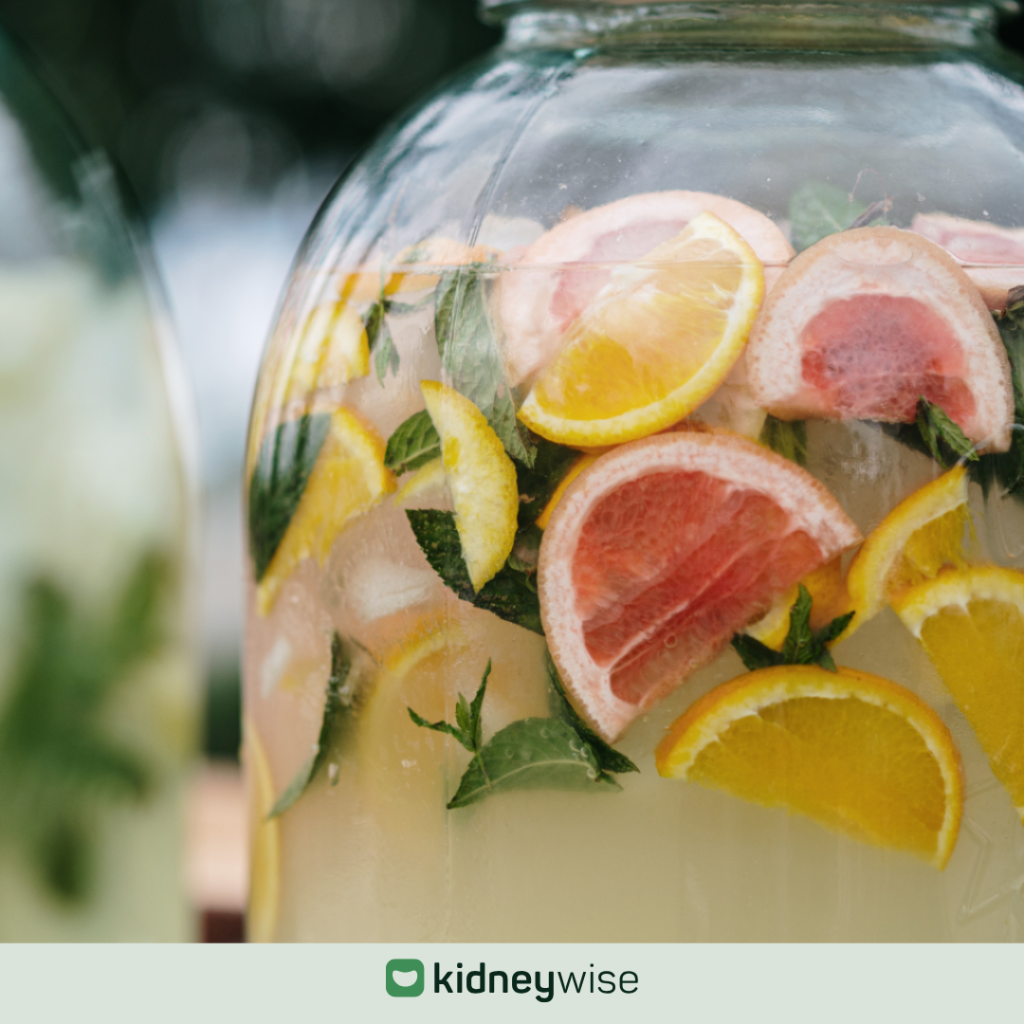
Water or fluid?
When healthcare professionals say “drink more water”, what exactly do they mean? Is it only water? Or do other fluids count? Thankfully other fluids do count. Later in the blog post, we’ll discuss what other drinks are suitable alternatives to water.
Why is hydration important?
Being well-hydrated simply means your body has the right amount of fluid to function at its best. Fluid plays a vital role in keeping you healthy by:
- Supporting your organs: Every organ in your body needs water to work properly.
- Maintaining healthy blood pressure: Proper hydration helps keep your circulation stable.
- Helping digestion: Water helps your body break down food and absorb nutrients.
- Keeping your brain sharp: Dehydration can lead to brain fog and fatigue.
- Promoting healthy skin: Hydrated skin is happy skin!
When your body has just the right amount of fluid, all these functions run smoothly. However, if you become dehydrated (not enough fluid) or overhydrated (too much fluid), it can throw things off balance and impact your health.
How do you stay hydrated?
This is where your kidneys come in! One of their most important jobs is managing your body’s fluid balance. When you drink fluids, your kidneys decide how much to keep and how much to remove through urine.
- If you’re well-hydrated, they filter out the extra water you don’t need.
- If you’re dehydrated, your kidneys hold onto water to prevent further loss.
As your kidneys play such a big role in hydration, as kidney function declines, it may become harder to regulate fluid levels. In some cases, people with advanced kidney disease may need to limit fluids to avoid fluid buildup (also referred to as fluid retention). This may also be the case if you have heart failure.
The good news? Most people with CKD Stages 3 and 4 do not need a fluid restriction and are encouraged to drink plenty of fluid! However, since hydration needs vary from person to person, it’s always best to check with your healthcare team to find the right balance for you.
Is water good for kidneys? Finding the right balance
Staying hydrated is all about balance. Both dehydration (not enough fluid) and overhydration (too much fluid) can affect your health and your kidneys, so it’s important to recognise the signs and know what to do.
Dehydration happens when your body doesn’t have enough fluid, often because you’re not drinking enough fluids. Signs and consequences of dehydration can be seen in the tables below.
Want to feel more confident about your food choices? Download our free guide CKD Results Made Simple, where we explain what your blood test results mean and how they connect to your diet.
👉 Download your free guide HERE
| Signs of dehydration |
|---|
| Thirst |
| Dry mouth |
| Fatigue |
| Dark yellow urine |
| Dizziness |
| Feeling faint |
| Headache |
| Consequences of Dehydration |
|---|
| Low blood pressure |
| Reduced kidney function (you may notice your eGFR is reduced if you are not well hydrated for your blood tests) |
| Acute kidney injury (in severe dehydration only) |
| Risk of kidney stones |
| Urine infections |
| Electrolyte imbalances eg sodium, potassium, calcium |
Overhydration is when there is too much water in your body, which is far less common in CKD Stages 3 and 4. It can happen when you drink excessive amounts of fluid or if your kidneys and heart aren’t able to remove extra fluid efficiently. Signs and consequences of overhydration can be seen in the tables below.
| Signs of Overhydration |
|---|
| Swelling in hands, feet or face |
| Shortness of breath |
| Excessively light-coloured urine |
| Peeing more frequently |
| Headache |
| Consequences of Overhydration |
|---|
| High blood pressure |
| Reduced kidney function |
| Nausea & vomiting |
| Fluid builds up in the lungs |
| Seizures (in severe overhydration only) |
If you experience these symptoms, it may be a sign that you need to adjust your fluid intake. Speak with your healthcare team to determine the right balance for you.
For most people with CKD Stages 3 and 4, dehydration is a bigger concern than overhydration, and drinking enough fluids is encouraged. However, since everyone’s needs are different, it’s always best to work with your healthcare team to find the right amount for you. By paying attention to your body’s signals and making small adjustments, you can stay hydrated in a way that supports your kidney health.

How much fluids should you drink?
You have likely been advised by your healthcare team to drink plenty of fluid. We always advise that you ask specifically how much fluid you should be drinking as recommendations vary by individual, depending on kidney function, medications, and other health conditions. So if you haven’t been advised of this, we suggest you ask your healthcare team at your next appointment.
In the meantime, some general guidance as recommended by the NHS is 6 to 8 glasses per day or the equivalent of 1.5-2 litres per day. However, be aware that this might be very different if you have kidney stones or other health conditions.
It is important to note that the amount of fluid you require can further vary on a day-to-day basis depending on factors such as weather conditions, exercise and current illness. If the temperature is high, if you are exercising more or if you are currently sick, then you will likely need more fluid during these periods.
Additionally as previously mentioned, as your kidney disease progresses from CKD Stage 3a to late Stage 4 you may be advised to drink less fluid if your kidneys are struggling to maintain the right amount of fluid in your body.
What are the alternatives to water?
Water is one of the best choices for keeping your kidneys healthy. Whether it’s tap water, still bottled water (including mineral water), or sparkling water, staying hydrated with plain water is always a great option.
But let’s be honest—if you’re not used to drinking water, it might seem a bit boring. The good news? There are plenty of kidney-friendly alternative drinks to drink alongside water to keep things interesting while still supporting your hydration goals.
Kidney-Friendly Alternatives
These are some of the best drinks for your kidneys and can count toward your daily fluid intake helping you add some variety to your routine. We have focused on lower sugar options for overall health:
- Tea: Regular tea, green tea, or herbal tea (such as fruit, mint or chamomile tea) are all great options. Just be mindful of added sugar—opt for unsweetened versions where possible.
- Low-sugar squash/Cordial: Any flavour works! This is an easy way to add some taste to your drinks without overloading with sugar.
- Non-cola diet fizzy drinks: Clear diet sodas like Sprite, 7Up, and Fanta can be included in moderation.
- Sugar-free flavoured water: These are widely available in both still and sparkling varieties, with plenty of flavours to suit your taste.
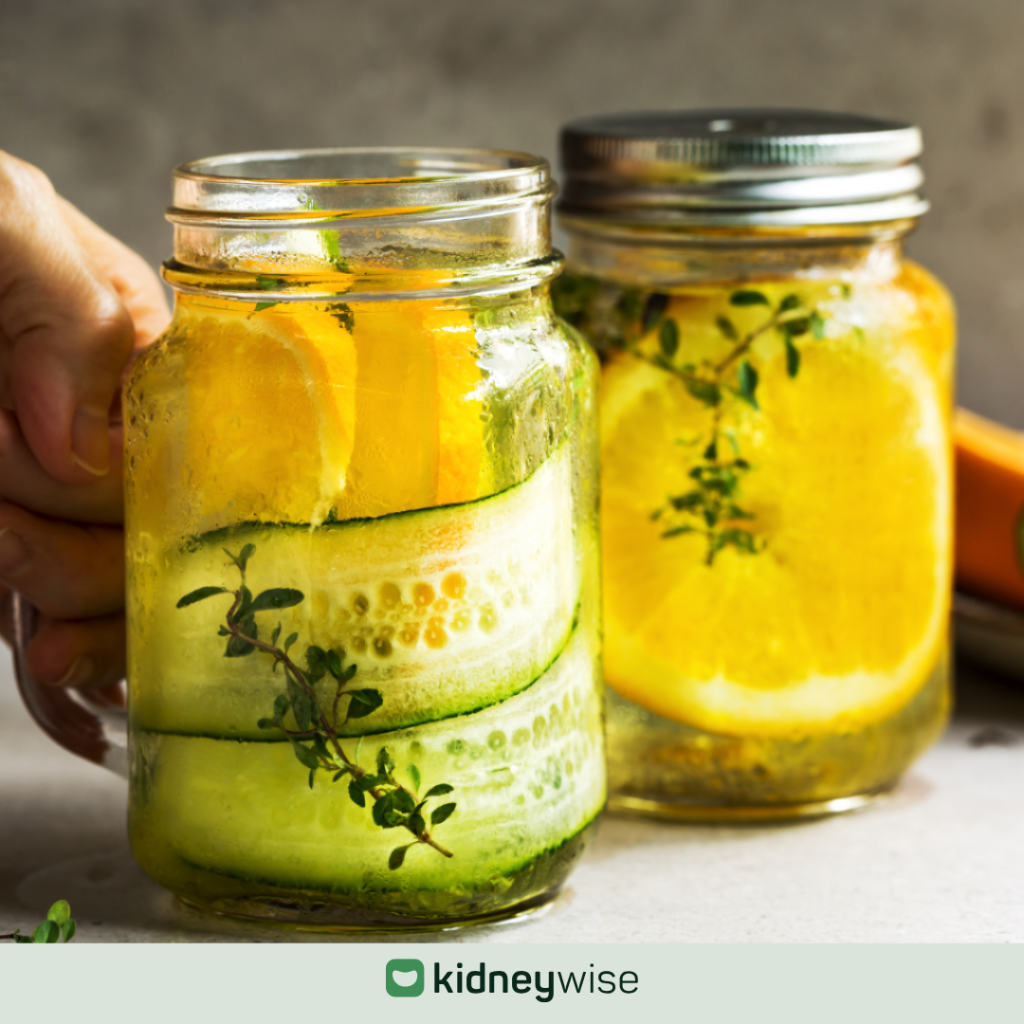
- Fruit-infused water: A simple and refreshing way to enhance plain water! Try adding berries, kiwi, orange, lemon, or cucumber slices for natural flavour.
- Milk: A good alternative if you enjoy dairy, but be sure to check which type of milk is best and how much for kidney disease. Read our blog post on Which milk is good for kidney disease for more information!
Drinks to Limit or Avoid
Some drinks can be dehydrating or contain ingredients that aren’t kidney-friendly. While you may still include some of them in moderation, it’s best to be mindful of how often you drink them.
- Sugary drinks: High-sugar soda/fizzy drinks, energy drinks, and sweetened squashes can contribute to dehydration and excessive sugar in your diet.
- Cola drinks: If you’re on a low-phosphate diet, it’s best to avoid diet cola and choose non-cola diet alternatives instead.
- Coffee: If you’re following a low-potassium diet, you may need to limit your coffee intake. Contrary to what some people think, coffee is not dehydrating when drunk in low to moderate amounts.
- Fruit juice: If you are having fruit juice, stick to one small glass per day of no-added sugar juice. If you’re on a low-potassium diet, apple and cranberry juice are the best options.
- Smoothies: Limit to one small homemade smoothie per day, using kidney-friendly fruits and vegetables. Store-bought versions often contain excessive sugar. This is likely to be high in potassium so best avoided if limiting potassium.
- Coconut water: Very high in potassium, making it unsuitable for people with CKD.
- Energy drinks: Packed with sugar and caffeine, these are not a healthy hydration choice.
- Sports/Electrolyte drinks: Sodium and potassium levels in these drinks vary, and they may not be safe for kidney disease. Only consume them if approved by your healthcare team, and choose sugar-free options when possible.
- Hot chocolate: Most commercial hot chocolate powders are highly processed and loaded with sugar. If you love hot chocolate, check out our kidney-friendly hot chocolate recipe made from cacao powder instead in our blog post Is chocolate bad for kidneys.
- Alcohol: Keep alcohol within recommended limits (no more than 14 units per week). If you’re on a low-potassium diet, be especially mindful of red wine, beer, lager, cider, and ale. Alcohol can also be dehydrating.
Practical tips to stay well-hydrated
Staying hydrated is essential for kidney health so here are some simple yet effective ways to ensure you’re getting enough fluids:
Check with your healthcare team: Hydration needs vary from person to person, depending on kidney function, medications, and other health conditions. Your doctor can guide you on how much fluid is right for you.
Keep track of your intake: A daily goal and a tracking method can make all the difference! Use a simple journal or hydration apps like Water Reminder, Waterllama, Plant Nanny, or WaterMinder to stay on top of your fluid intake.
Set gentle reminders: If you often forget to drink, try setting an alarm or using an app to give you a nudge. A small reminder can go a long way in keeping you hydrated.
Sip, don’t gulp: Instead of drinking large amounts at once, take small sips throughout the day.
Bring a bottle wherever you go: Having a water bottle with you makes it easier to drink throughout the day. Choose one with measurement markings to help you track your progress.
Mix it up: If plain water isn’t your favourite, alternate with kidney-friendly drinks like infused water, herbal teas, or other suitable alternatives for variety.
Be mindful of dehydrating drinks: Limit caffeine and sugary drinks, as they can lead to fluid loss.
Watch for signs of dehydration: Dry mouth, dizziness, and dark-coloured urine can be warning signs that you need more fluids (within your recommended limits). Pay attention to these cues and adjust your intake accordingly.
Find the right temperature: Room-temperature fluids are often easier to drink in steady amounts compared to ice-cold beverages, which might slow you down.
By making hydration a part of your daily routine, you can support your kidneys while feeling your best!
So, there you have it! We’ve covered the crucial aspects of fluid management for CKD Stages 3 and 4, from understanding the importance of hydration and recognising the signs of dehydration and overhydration to exploring a variety of kidney-friendly beverage options. While general guidelines exist, it’s essential to personalise your approach based on your individual needs.
If you’re still feeling unsure about your specific fluid requirements or would like further personalised guidance on managing your diet, book a FREE enquiry call so we can chat about your situation and explore how we can help you navigate your CKD journey with confidence.
Disclaimer: This advice is primarily for individuals with CKD Stages 3 & 4. It is solely educational and provides general advice only. It is not a substitute for seeing a registered dietitian or another qualified healthcare professional.

