

If you have chronic kidney disease (CKD), you may find yourself asking, “which cheese is good for kidney disease?” With the huge variety of cheeses on the market, figuring out which cheeses are suitable can feel overwhelming. The good news is that cheese doesn’t have to be off the menu. With some thoughtful choices, it can still be part of a healthy, kidney-friendly diet.
In this blog post, we’ll explore the key nutrients found in cheese, highlight which types of cheese are more suitable for CKD, and offer practical tips for selecting cheeses for your kidney-friendly diet. Plus, expert tips on portion sizes and what to look out for when you’re next in the supermarket.
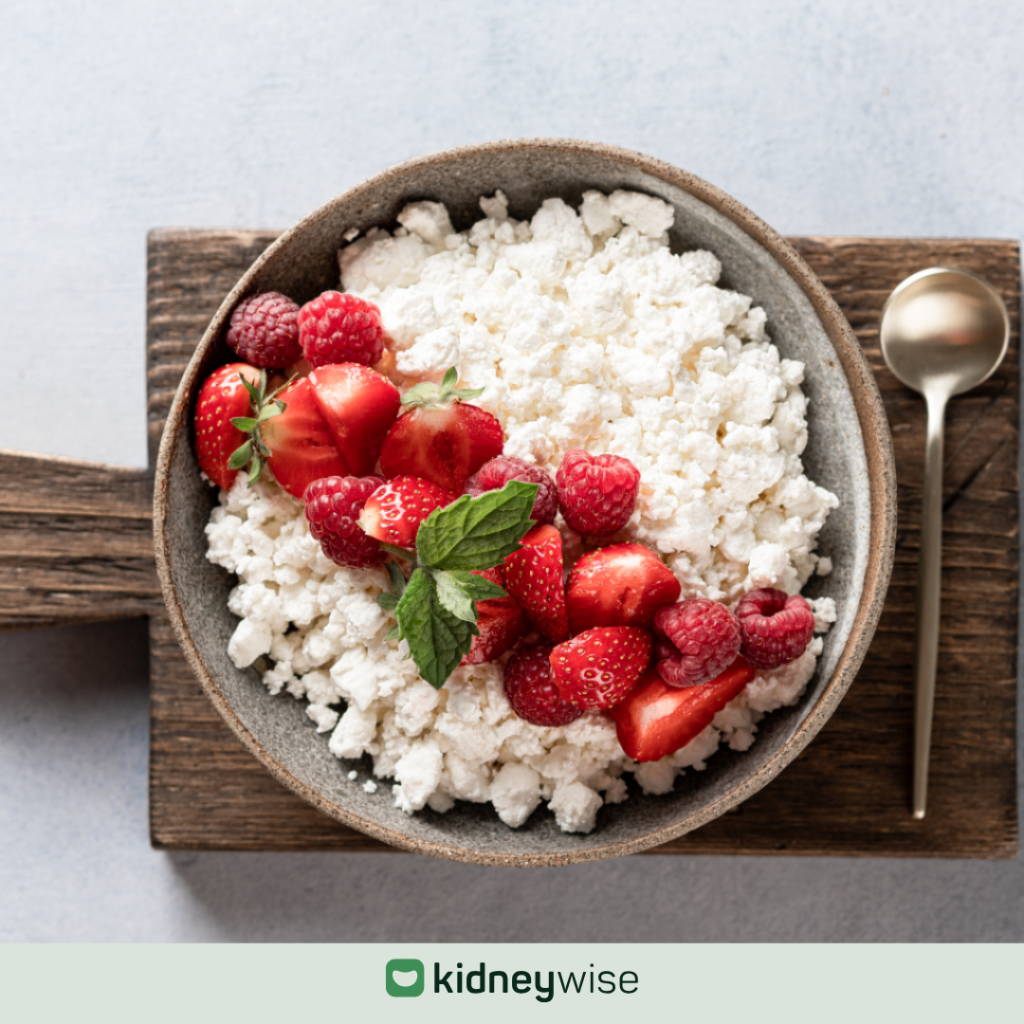
Which cheese for CKD?
Cheese comes in a range of styles, from soft and creamy to hard and aged, each with its unique flavour and nutritional profile.
To make it easier to choose the right cheese for you, here’s a comparison of different types of cheese:
Soft cheese
Uses: Moist and easy to spread, making them versatile for cooking e.g. in any sauces, topping to homemade bread or wholegrain crackers and as a base for dips.
Examples: Cottage cheese, cream cheese, ricotta, mascarpone, paneer, Quark.
Is it kidney-friendly? An excellent option as this type of cheese is low in salt. It also has lower amounts of phosphate than other cheeses and typically contains minimal or no additives so is a good option if you are on a low phosphate diet.
Semi-soft cheese
Uses: Good for melting or crumbling in salads for those with harder textures.
Examples: Mozzarella, feta, goat’s cheese, halloumi.
Is it kidney-friendly? This type of cheese can be a good option though it varies in salt with mozzarella having the lowest salt content. Most are lower in phosphate compared to other cheeses and usually have minimal additives.
Soft ripe cheese
Uses: Another good melting cheese, often served on cheese boards.
Examples: Brie, Camembert.
Is it kidney-friendly? Higher in salt than soft and semi-soft cheeses. This type of cheese should only be eaten occasionally and a small portion is recommended.
Hard cheese
Uses: Good for sandwiches and added to dishes eg salads, pasta
Examples: Cheddar, Edam, Swiss (Emmental), Gouda, blue cheese (Gorgonzola, Danish Blue), Parmesan.
Is it kidney-friendly? Most are moderate to high in salt (except Emmental). All are high in phosphate and some may also contain additives. The higher salt varieties should only be eaten occasionally and a small portion is recommended.
Processed cheese (with additives)
Examples: Cheese spreads (such as Dairylea), processed cheese slices eg American cheese slices.
Are they kidney-friendly? This type of cheese is high in salt and phosphate additives and therefore should be avoided.
Plant-based cheese (made from nuts, seeds or starches)
Examples: Cashew cheese, almond cheese, rice cheese
Are they kidney-friendly? These are typically high in salt and saturated fat (due to coconut oil). If you follow a vegan diet, then check the nutrition label and opt for the one with the lowest salt content, being mindful of portion sizes.

Want to feel more confident about your food choices? Download our free guide CKD Results Made Simple, where we explain what your blood test results mean and how they connect to your diet.
👉 Download your free guide HERE
Practical tips
Here are some practical tips to help you include cheese in a kidney-friendly way!
1- Choose lower salt and lower phosphate options
Choose cheeses that are lower in both salt and phosphate (if you are on a low phosphate diet).
Salt is sometimes listed as ‘sodium’ on the nutrition label and you can compare different cheeses in this way to find lower salt options.
The table below can give you a head start in helping you decide.
- Choose low salt options to have the majority of the time you eat cheese. Eat moderate and high salt options occasionally and always in smaller quantities.
- If you are on a low phosphate diet, choose those that contain low or medium amounts of phosphate and avoid all those with high phosphate or phosphate additives.
Low Phosphate (less than 0.2g per 100g) | Medium Phosphate (between 0.2-0.3 g per 100g) | High Phosphate (more than 0.3g per 100g) | |
Low Salt (less than 0.3g per 100g) | Ricotta Mascarpone | Quark | Paneer Swiss (Emmenta)l |
Medium Salt (between 0.3-1.5g per 100g) | Cottage cheese Cream cheese | Mozzarella Brie | Wensleydale |
High Salt (more than 1.5g per 100g) | Camembert White Stilton Feta Goats cheese | Blue Stilton Danish Blue Port Salut Roquefort Double Gloucester Red Leicester Gouda Cheddar Edam Halloumi Gruyere *Cheese spread Parmesan *Processed cheese |
*contains phosphate additives so recommended to avoid
2- Be mindful of portion sizes
If your favourite cheese is less kidney-friendly then we recommend a 30g serving (about the size of a matchbox) to help manage salt and phosphate. However, if choosing more kidney-friendly options, then you can have a larger portion.
3- Make cheese go a long way
Choosing stronger flavoured cheeses, such as extra mature cheddar over mild cheddar, can be a good option to get extra flavour using a smaller amount. Grating cheese over dishes is another good way to enjoy their taste without overloading on salt or phosphate.
4- Watch your frequency
Less kidney-friendly cheeses can still be enjoyed if you have CKD – just don’t have them all the time! If you are not on a low phosphate diet, eating 30g of any non-processed cheese twice a week will be fine. You may be able to have more depending on your individual dietary habits.
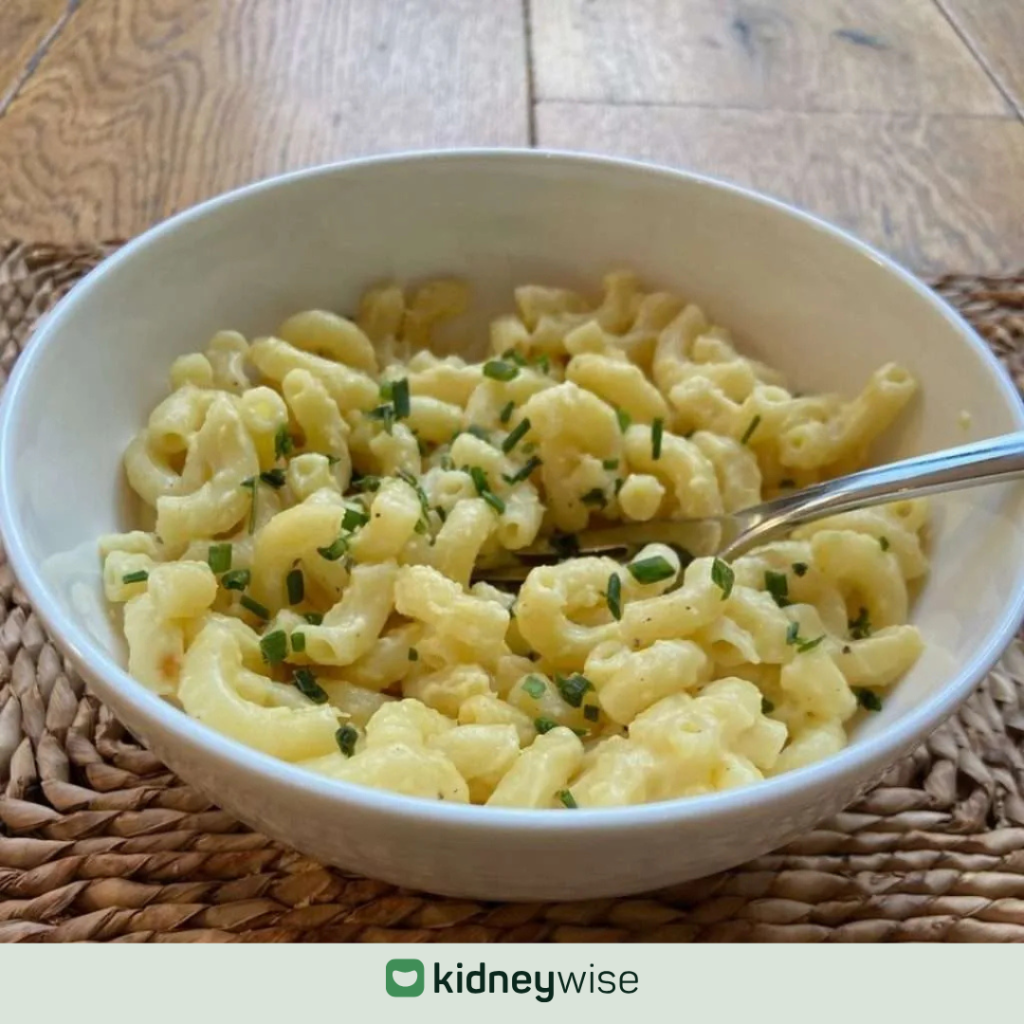
Kidney-friendly macaroni cheese
Who doesn’t love a bowl of hot comforting creamy macaroni cheese? Try our low salt kidney-friendly version – it’s the perfect midweek dinner!
Serving size: 4
Ingredients:
200g macaroni (dried)
2 tbsp of rapeseed oil
2 tbsp of flour
1 tsp dried mustard powder
¼ tsp garlic granules
Ground pepper to taste
1 cup of milk (or plant-based alternative)
2 tbsp nutritional yeast*
30g mozzarella
30g cream cheese
1 tbsp of chopped chives
*Nutritional yeast is dried nutritional yeast flakes. It is an excellent low-salt and vegan replacement for strong tasting hard cheeses such as Parmesan due to its cheesy flavour. You can sprinkle it over foods and it is an excellent source of B vitamins.
Directions:
- Cook the macaroni according to instructions and drain when finished. Whilst cooking the macaroni, make the white sauce.
- Place the rapeseed oil in a saucepan and place on a low heat.
- Stir in the flour, mustard powder, garlic granules and black pepper using a wooden spoon. Keep stirring over a low heat until the mixture is smooth and starts to bubble.
- Keep stirring as you add in the milk slowly, mixing it in as you go. Once all the milk is added, keep stirring and bring the white sauce to the boil for one minute.
- Stir in the nutritional yeast, then add the mozzarella and cream cheese until fully melted and incorporated.
- Stir the cooked macaroni into the white sauce, mix thoroughly, sprinkle over some chives and serve immediately.

We hope this blog post has made it easier for you to choose cheeses that you enjoy and that suit your nutritional needs with CKD.
A small adjustment to your diet, like selecting kidney-friendly cheeses, avoiding additives, or moderating portion sizes, can make a big difference in managing your CKD. By checking nutrition labels, choosing lower salt and lower phosphate options and enjoying cheese in moderation, it can remain a delicious and nutritious part of your kidney-friendly diet.
