

If you’re living with CKD stages 3 or 4, you might feel like chocolate has been added to the list of “forbidden foods,” but don’t worry—this blog post is here to prove otherwise!
We know how comforting and delightful chocolate can be,whether it’s a cozy hot cocoa, a creamy dessert, or your favorite chocolate bar. It’s normal to feel torn between enjoying your favourite treat and worrying about how it might impact your kidneys. The good news? You can savour chocolate in a kidney-friendly way, without fear or guilt, and still feel like you’re doing the right thing for your health.
In this post, we’ll explore the different types of chocolate, dive into what nutrients (both good and tricky) chocolate contains, and share practical tips on how to safely incorporate it into your diet!

Types of chocolate
Chocolate can be enjoyed in many different forms and you probably have your favourite whether it’s a chocolate bar with a cup of tea, a rich chocolate dessert at your favourite restaurant or a steaming hot chocolate before bed.
Let’s explore the different types of chocolate!
| Processed | Ingredients | Nutritional value | Taste | |
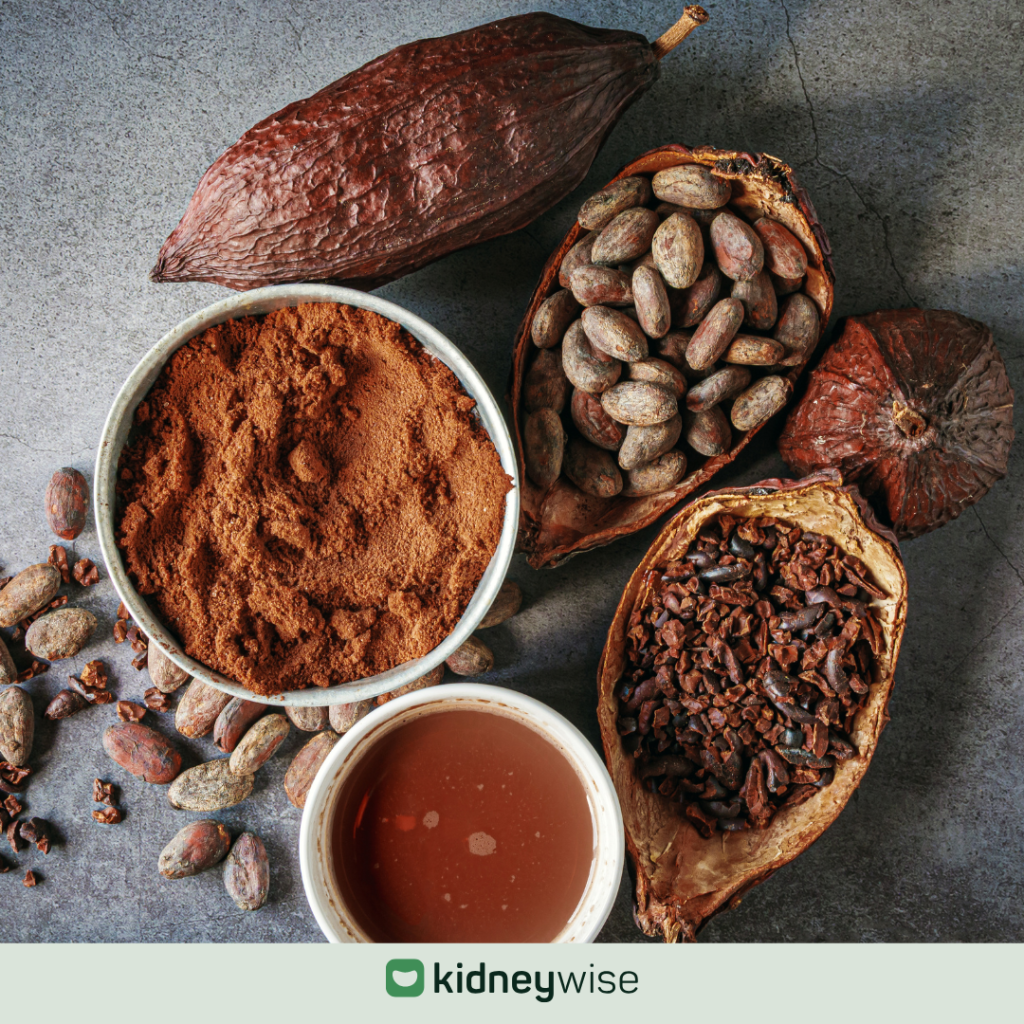
| Cacao powder and cacao nibs | Least processed | Cacao bean | Highest nutritional value | Strong bitter taste |
| Natural cocoa powder | Minimally processed | Cacao bean | High nutritional value | Smoother and less bitter than cacao |
| Hot chocolate powder mixes eg Cadbury, Galaxy, Twinings | Usually ultra- processed | Cocoa powder and other ingredients eg sugar, milk powder and additives | Lower nutritional value | Varies between brands |
Chocolate bars eg solid chocolate bars or combined with biscuits, caramel, nuts, dried fruit | Varies between dark, milk and white chocolate | Cocoa powder and other ingredients eg sugar and additives | Varies between dark, milk and white chocolate | Varies between dark, milk and white chocolate |
| Chocolate products eg ice cream, mousses, cakes, biscuits | Highly processed | Cocoa powder and other ingredients eg sugar, milk powder, oil and additives | Lower nutritional value | Varies between products |
Dark, milk and white chocolate
Dark, milk, and white chocolate differ mainly in their ingredients, flavour, and nutritional content.
- Dark Chocolate: Contains 50-90% cocoa, minimal milk solids, and less sugar. It’s nutrient-dense with a bold, slightly bitter flavor.
- Milk Chocolate: Sweeter and creamier, it has less cocoa and more milk solids, sugar, and fat.
- White Chocolate: Made from cocoa butter, sugar, and milk solids—no cocoa solids—making it the sweetest and least nutrient-dense option.
Nutritional considerations of chocolate for CKD
When navigating a kidney-friendly diet, understanding the nutritional aspects of chocolate can help you make better choices while still enjoying this beloved treat.
Sugar: Sweetness Comes at a Cost
Chocolate, unless in its natural forms like cacao nibs or natural cocoa powder, usually contains added sugar to enhance its taste. Dark chocolate typically has less sugar than milk or white chocolate, and the higher the cocoa percentage, the lower the sugar content.
However, beware of hot chocolate mixes—many are sugar-heavy, with some leading brands containing up to 60% sugar! One serving can pack in three tablespoons of sugar, so moderation and label-reading are key.
Fat: The Creamy Trade-Off
Chocolate contains fats derived from cocoa butter, often supplemented with added oils and milk powders. These fats are usually saturated, which, in large amounts, can contribute to heart disease and other health issues.
Of the three main types, dark chocolate contains the least fat, making it a better option for those watching their intake.
Potassium: A Balancing Act
Chocolate naturally contains potassium, thanks to the cacao bean. For individuals with more advanced kidney disease, managing potassium intake could be crucial since excessive potassium can impact heart muscle function.
Dark chocolate, with its higher cocoa content, contains more potassium than milk or white varieties. If your healthcare provider has advised you to follow a low-potassium diet, opt for dark chocolate with a lower cocoa percentage (definitely less than 70% cocoa).
Phosphate: Read the Labels
Chocolate also contains natural phosphate, and processed products like hot chocolate mixes may also include phosphate additives. Additives are absorbed more readily by the body and should be limited on a low-phosphate diet.
Although dark chocolate generally has higher phosphate levels due to its cocoa content, it’s more important to check labels for additives when selecting chocolate products due to them being more readily absorbed.
Antioxidants: The Sweet Perks of Dark Chocolate
One of chocolate’s redeeming qualities is its rich antioxidant content, particularly flavanoids, which are found in cacao beans. These antioxidants boast anti-inflammatory properties and may help protect against cardiovascular disease. Dark chocolate shines in this category, with higher cocoa percentages offering more antioxidants than milk or white chocolate.
Want to feel more confident about your food choices? Download our free guide CKD Results Made Simple, where we explain what your blood test results mean and how they connect to your diet.
👉 Download your free guide HERE
Practical tips to include chocolate in a CKD friendly diet
Choose dark chocolate
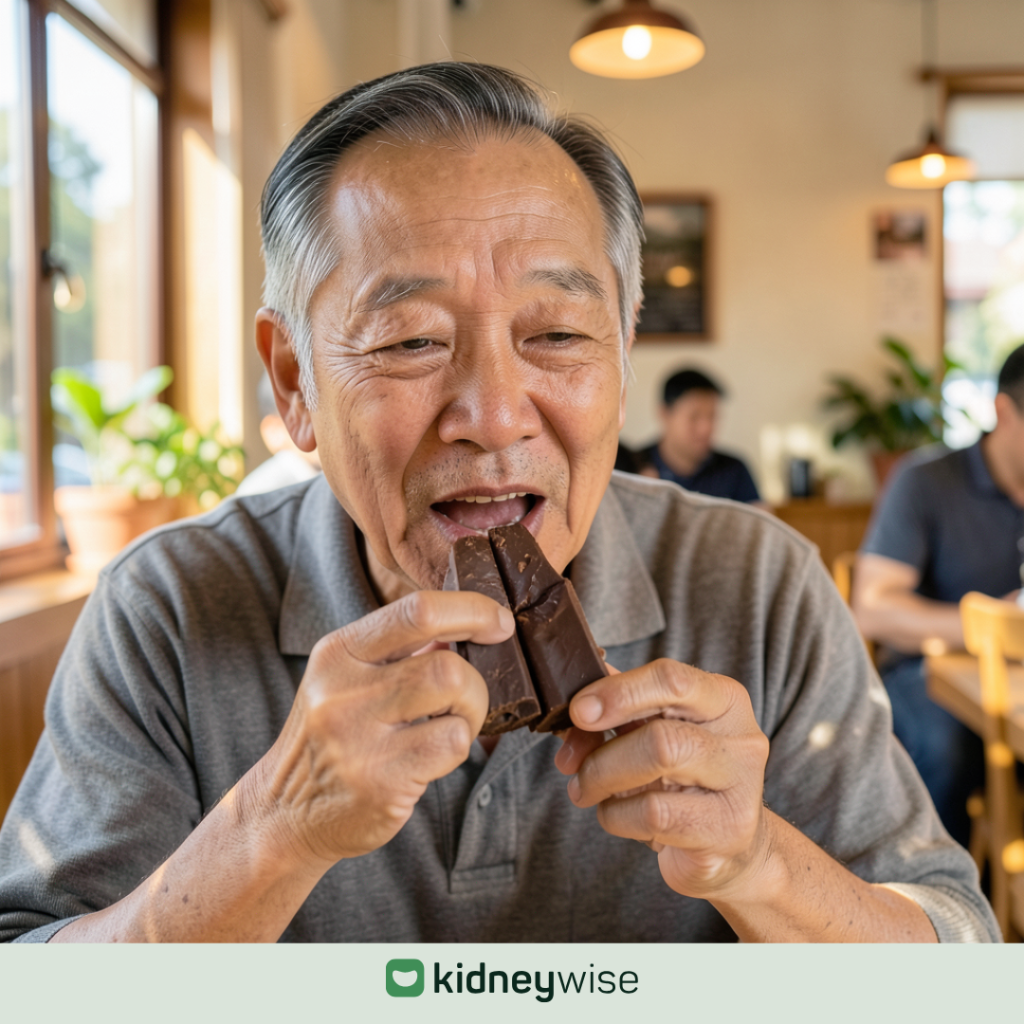
If opting for a chocolate bar, choose dark chocolate over milk or white as it is lower in sugar and fat and higher in antioxidants so it is a better choice for diabetes, heart health and overall general health.
Although it has a higher amount of potassium and phosphate, you can choose a variety with a slightly lower cocoa content eg less than 70% for less potassium. Furthermore phosphate in its natural form is not absorbed easily by the body.
Practice portion control
Be mindful of portion sizes when you eat chocolate. Fun sized varieties may help or aim for a few squares of a larger bar.
Select lower chocolate content
If you enjoy eating chocolate regularly, you may wish to choose those that have a lower chocolate content so you can still enjoy the taste of chocolate without actually eating a lot of chocolate! This can include Kit Kat, Maltesers, chocolate covered biscuits, chocolate covered rice cakes or even chocolate dipped strawberries!
Check labels for phosphate additives
Check the ingredients label for any added phosphate additives in hot chocolate mixes and chocolate desserts. If you enjoy hot chocolate, why not use natural cocoa powder instead or check out our hot chocolate recipe at the end of the blog.
Enjoy as an occasional treat
Include chocolate in your diet as an occasional treat rather than something you eat every day. If you do eat it more frequently opt for fun sized varieties and those with a lower chocolate content.
Avoid high potassium additions
If you are on a low potassium diet, try to choose chocolate bars or desserts that don’t contain other high potassium ingredients eg dried fruit, nuts.
Get creative in the kitchen
Small amounts of cocoa powder are OK to use in baking as the amounts once divided up into each serving size, is usually only a small amount. Try experimenting with cacao nibs and cacao powder in smoothies, homemade granola or baking to get your chocolate fix!
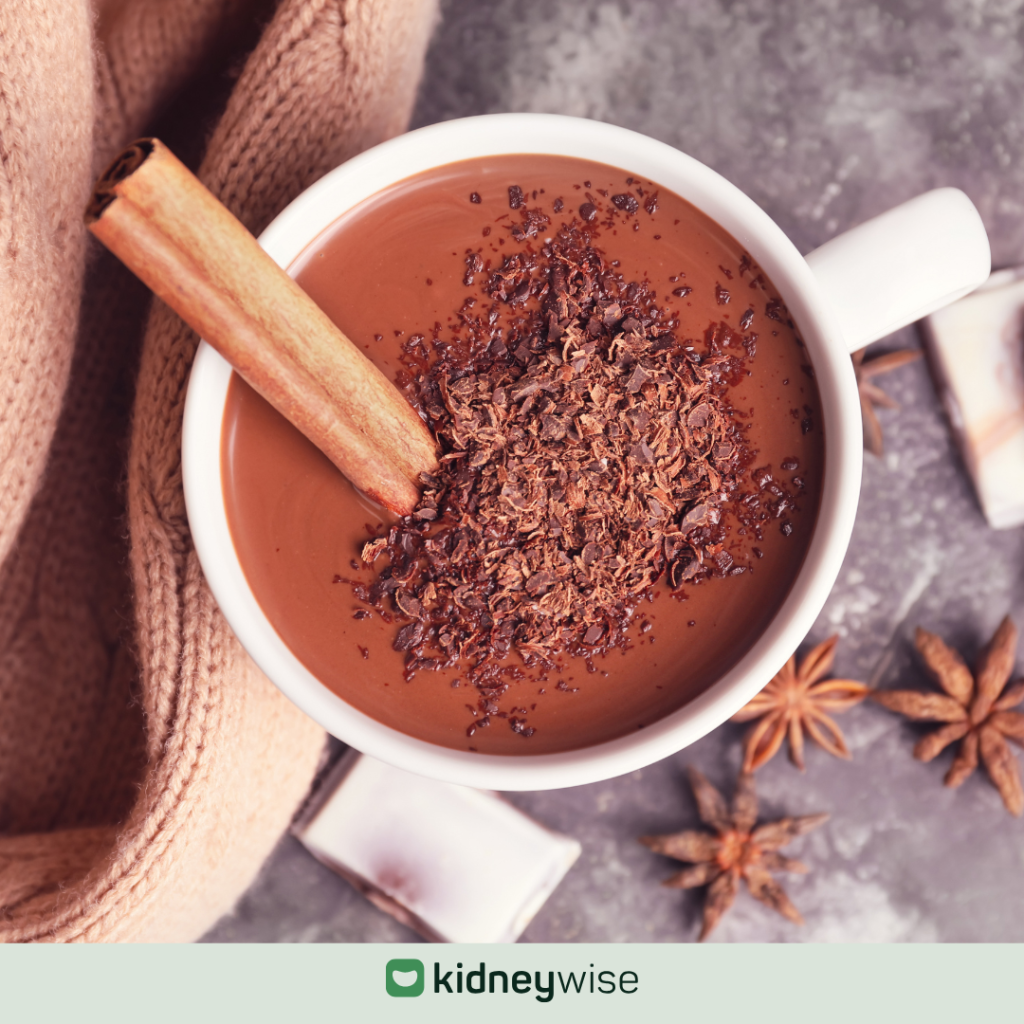
Kidney friendly hot chocolate recipe
Serving size: 1
Ingredients:
- 240 mls unsweetened plant milk (e.g., almond milk)
- 1.5 tbsp cacao powder
- 1 tsp maple syrup
- ½ tsp vanilla extract
- Sprinkle of cinnamon
Directions:
- In a saucepan over low-medium heat, whisk together all ingredients until well combined and warm (about 5-7 minutes).
- Serve warm.
So who says living with CKD means saying goodbye to chocolate? With a little know-how and mindful choices, you can still indulge in your favourite treat while keeping your kidneys happy. Whether it’s savouring a few squares of dark chocolate, whipping up a homemade hot cocoa with natural cocoa powder, or enjoying a chocolate-dipped strawberry, there’s always room for a little sweetness.
Chocolate is a treat, not a cheat—so enjoy it without guilt!
Follow us on Instagram and Facebook for more helpful tips, recipes, an d updates to keep your diet both enjoyable and kidney-friendly!
This is solely educational and provides general advice only. It is not a substitute for seeing a Registered Dietitian or another qualified healthcare professional.
